 Skip to content


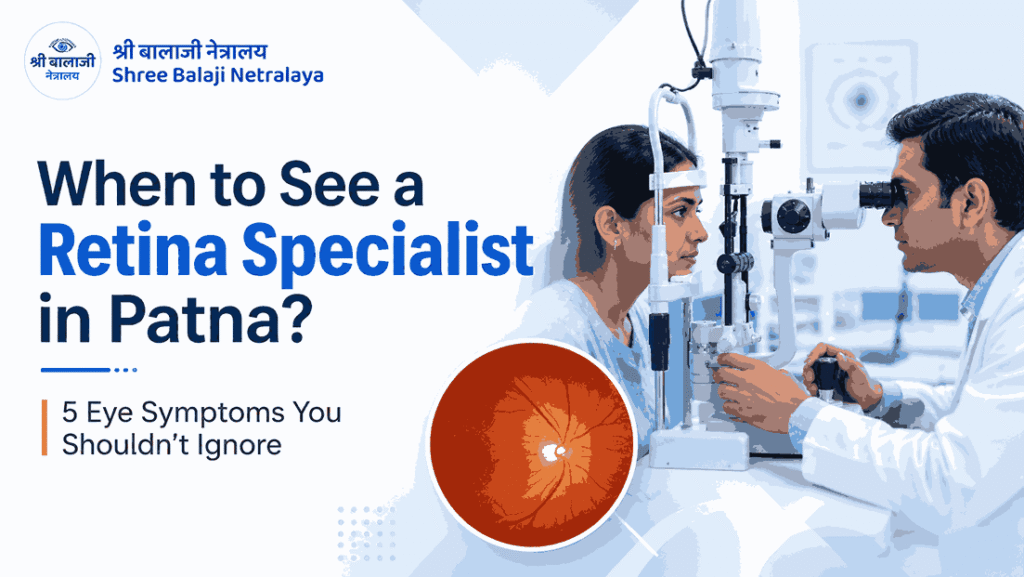
One of the favorite sayings at Shree Balaji Netralaya in Patna is “Your retina is the MVP of your eye.” The retina is responsible for not only for seeing in general, but also for reading, recognizing, driving, and for noticing the small details.
Retinal issues are the sneakiest of issues. They either begin slowly and quietly, or they happen out of the blue without a moment’s notice and need your immediate attention.
If you are looking up retina specialist in Patna, you are probably worried about your visionary issues or symptoms concerning eye floaters, flashes, trouble caused by diabetes, or sudden changes in vision. Don’t wait and don’t guess. The best move is to get your retina checked.
At Shree Balaji Netralaya, Patna, patients are able to visit and consult with specialist and professional doctors of all fields of the eye including the retina, diabetes eye issues, cataracts, glaucoma, ICL, squint, and all forms of eye care.
When is it necessary to see a retina specialist?
It is necessary to see a retina specialist when you experience sudden or unusual changes to your vision and those changes don’t correct themselves promptly.
Visit an eye hospital in Patna for retina issues when you experience:
- Sudden appearance of black spots or floaters
- Flashes of light
- Shadows or curtains obstructing vision
- Blurry or distorted vision in the center
- Changes to vision while diabetic
- Sudden blindness
- Reading is now wavy
- Eyes have suffered an injury with vision change
- Vision changes frequently
- Family members have retinal disorders
It is very important to pay attention to this list of symptoms because there are many retinal issues that are time sensitive for diagnosis and treatment.
What Is the Retina and Why Is It Important?
The retina is located at the back of the eyeball. It is a thin layer that is sensitive to light and captures images that get sent to the brain.
The retina is like the sensor of the camera. As long as the retina is healthy, you will have a clear vision. If the retina goes bad, then the vision will turn blurred, distorted, and even disappear.
There can be numerous issues caused by a damaged retina.
Reading
Driving
Even recognizing faces
Central and even peripheral vision
Night vision
All can be distorted due to damaged retina
These are all affected in your daily life and can even cause issues over an unmeasurable quality of life.
Because of this, it is important to take damaged retina seriously.
Who Is a Retina Specialist?
A retina specialist is an eye doctor that treats issues of the retina, macula, and the vitreous.
The macula is the central area of the retina that processes clear vision, and the vitreous is the gel inside the eyeball.
A retina specialist in Patna can treat some of the following:
- Diabetic retinopathy
- Retinal detachment
- Retinal tear
- Macular edema
- Age-related macular degeneration
- Retinal vein occlusion
- Floaters and flashes
- Retinal bleeding
- Vitreous hemorrhage
- Even Sudden vision loss
Because these are all symptoms of eye issues relating to the retina, this calls for a thorough examination of the retina.
Why Retina Problems Should Not Be Delayed
Even though many issues of the eye can be dealt with at a routine appointment, problems with the retina cannot be the same.
Some conditions of the retina can even be worsened and, even, go beyond repair in the same time span it would take for other issues to be dropped to a routine appointment. Other symptoms that could even go beyond repair include a sudden curtain in your vision, showers of floaters, and even flashes. These should all be seen by a professional immediately.
The better chances of protecting your vision is correlated to how early the issue is found.
Some issues like retinal detachment, diabetic retinopathy, and retinal bleeding can make treatment difficult the longer you wait.
5 Eye Symptoms You Should Not Ignore
You should definitely consult your eye doctor or a retina specialist for any of the following 5 symptoms.
- Sudden Appearance of Floaters or Black Spots
Floaters are defined as cobweb-like threads that appear to move through your field of vision.
While floaters can appear with age and be benign, the appearance of many floaters especially all at once should be of concern.
You should go to an Eye Hospital in Patna for the following:
- Significant increase in floaters
- Black moving spots in your field of vision
- Floaters and light flashes
- Floaters after an eye injury
- Blurred vision with floaters
Floaters that cast a shadow in your peripheral field of vision
These symptoms likely indicate bleeding in the retina, a retinal tear, or even a detachment.
Never try a home remedy or wait it out for weeks to check your retina.
- Light Flashes
Light flashes can sometimes be experienced as a lightning bolt or a camera flash, while other times it can be sparks or light that flickers in your peripheral vision.
It is normal for some people to experience the occasional light flash, but you should be concerned for your health if you experience frequent or numerous flashes in a short period of time.
Light flashes can occur from the vitreous body pulling on the retina and can actually cause a tear.
Visit an eye doctor your flashes are
- sudden
- recurrent
- accompanied by floaters
- accompanied by blurred vision
- accompanied by a dark shadow
- occurring after eye trauma
Flashes are serious and should never be ignored, especially if they are new.
- A curtain-like shadow or loss of side vision
This is the most serious of the warning signs.
A dark curtain, shadow, or black area progressively covering your vision means you should be seeking emergency eye care. This is likely a retinal detachment.
Retinal detachment means the retina has separated from its normal position. This is an emergency and threatens the vision if not treated in time.
Warning signs may be the presence of
- A dark curtain in vision
- Shadow from one side
- Sudden loss of side vision
- Floaters with flashes
- Sudun blurred vision
- Partial loss of vision
This is not a symptom to wait on. Seek a retina specialist or emergency eye care as soon as possible.
- Blurry, wavy, or distorted central vision
If straight lines lose their integrity and appear wavy, blurry distorted central vision makes reading and recognizing faces more difficult, you may have a problem with the macula.
The macula is responsible for central, sharp vision. Anything impacting quality of vision at the level of fine detail will severely affect functionality in daily life.
You may have
- Blurry vision with central dark spot
- Loss of fine detail
- Distorted image size
- Difficulty recognizing faces
Difficulty reading with words appearing to have missing elements
These symptoms may be early signs of macular edema, age-related macular degeneration, diabetic eye disease, or other macular conditions.
If there is distortion in one of your eyes, close one eye at a time to see how each one is different. Make an appointment for a retina check if one eye sees differently.
- Diabetes and Changes in Vision
If you are a diabetic, you need to be having regular eye check ups at the retina.
Diabetes can be damaging to the tiny blood vessels within the retina. This is known as diabetic retinopathy.
The difficult part about this is that early stages of diabetic retinopathy can be asymptomatic. The patient may feel as if their vision is entirely fine, but that is not the case and changes may happen within the retina.
Some eye symptoms you should never ignore if you are a diabetic include:
Blurry vision
Seeing floaters
Changes to vision that seem to happen suddenly
Poor vision at night
Changes to vision that are sudden
Difficulty reading
Spots in your vision
Heaviness in your eyes
Long standing high blood sugar
Make sure you are having regular diabetic retina check ups to prevent vitally important changes from happening to your eyesight.
Other Symptoms That Require a Retina Assessment
Beyond the major symptoms outlined, you should make an appointment with an eye doctor if you experience:
- Sudden vision loss in one eye
- Vision becoming dim
- Eye injuries that disturb vision
- Significantly increased short sightedness with floaters
- Previous issues with your retina
- Family history of retina diseases
- Vision changes with high blood pressure
- Kidney disease with diabetes
- Vision not improving after a change in glasses
- Seeing a dark patch while reading
Changes in vision require an assessment at the retina, even if the symptoms seem small.
Why Diabetic Patients Need to Be Most Careful
Diabetes is one of the most regular reasons why people need to have a retina screening.
High blood sugar can damage the small blood vessels that nourish the retina. Eventually, these blood vessels may start to leak, bleed, and cause the retina to swell.
Diabetic eye disease occurs in both Type 1 and Type 2 diabetes.
You may be more susceptible to developing diabetic eye disease if you have:
- Had diabetes for a long time
- Poor blood sugar control
- High blood pressure
- High blood cholesterol
- Kidney disease
- Diabetes during pregnancy
- Not received a yearly eye check-up
- Diabetic eye disease in the past
Diabetic eye disease can occur even when there are no symptoms. You should have regular retinal examinations that are advised by your eye doctor.
What Happens at a Retina Examination?
A retina examination is usually a quick and easy procedure.
At an Eye Hospital in Patna, Doctors may check your vision and the pressure in your eyes. You may also have eye drops placed in your eyes to help in widening your pupils.
A retina examination may include the following:
- Vision test
- Pressure test
- Slit lamp examination
- Dilated eye exam
- Fundus examination
- OCT scan
- Retina photography
- History of blood sugar to discuss
- Potential treatment options
Your vision may be blurry for a couple of hours if you had a dilated eye exam. It is not a good idea to drive after the exam.
What Are the Common Retina Conditions Patients Should Know About?
Diabetic Retinopathy
This may occur when diabetes affects the blood vessels that service the retina. It can cause bleeding and swelling and can result in vision loss if not managed timely.
Retinal Detachment
This occurs when the retina is out of position and may cause symptoms like seeing floaters or flashes and may also cause a curtain effect to come and go along with sudden vision loss. This should be treated as an emergency.
Retinal Tear
When the vitreous pulls on the retina, it can cause a tear. This can lead to retinal detachment.
Macular Edema
Swelling in the macula can happen and cause central vision to become blurred and distorted.
Age-Related Macular Degeneration
This condition can develop in the elderly resulting in distorted vision. Blurred central vision and difficulty in reading may also be symptoms. Lines can appear wavy.
Retinal Vein Occlusion
This results in a blockage in the retinal vein and may lead to vision loss or a sudden decline in clarity.
When is Treatment of the Retina Necessary?
This will depend on the disease stage and the specifics of the diagnosis.
A retina specialist may recommend:
- Close observation
- Improved control of blood sugar and blood pressure
- Laser treatment of the retina
- Injections to the eye
- Medications in certain situations
- Surgery for advanced disease
- Repeat imaging
- Treatment of the retina in a detached state
Not all problems with the retina will require surgery. However, all symptoms will warrant a full evaluation.
Why Does Early Diagnosis Protect Vision?
It allows the eye care specialist to have more treatment options.
Many diseases of the retina have a poor prognosis for recovery if the patient waits to seek care until vision is grossly impaired. Keeping this in mind, the objective of the early diagnosis is to allow the patient to have the highest chance of normal or near normal recovery of vision.
An early evaluation of the retina can help with:
- Identifying disease early
- Reducing the likelihood of vision loss
- Establishing the treatment in the proper timely stage
- Allowing monitoring for changes in the eye from diabetes
- Avoiding complications
Retaining the ability to see for the long term
Even if your vision appears to be normal, the eye may not be. A good evaluation can identify problems that you may not be aware of.
How to Choose the Right Retina Specialist in Patna
Picking the right specialist significantly impacts your eye care journey.
Prior to choosing a Retina Specialist in Patna, consider whether the hospital provides:
- Full range of retina evaluations
- Diabetic eye assessments
- Support for diagnostic testing
- Comprehension of your condition
- Development of a treatment plan based on your testing
- Post-evaluative treatment
- Management of symptoms that require immediate attention
Counseling with a focus on convenience and comfort
A good physician does not obfuscate with a barrage of medical jargon. They provide an understanding of the situation at hand and its severity, along with the available options.
Why Choose Shree Balaji Netralaya for Retina Care in Patna?
Shree Balaji Netralaya in Patna provides eye care for cataract, retina, glaucoma, diabetic eye care, ICL, squint, and general eye concerns.
Patients can visit the hospital for issues such as floaters, flashes, changes in diabetic vision, blurred vision, macular concerns, and sudden onset of vision problems.
At Shree Balaji Netralaya, we focus on:
- Precise identification of the problem
- Consultation with a focus on convenience and comfort
- Retina screening
- Diabetic eye health
- Development and planning of a treatment plan
- Post-evaluative treatment
- Comprehensive eye care in one location
If you are looking for a physician in Patna for retina problems, Shree Balaji Netralaya helps you comprehend your eye problems and the next best step.
Explain to your physician the following:
- The date you first noticed your symptoms
- Whether it affects one or both eyes
- The timing of the floaters (i.e. sudden?)
- Are flashes seen?
- Is your vision blurred or distorted?
- Is there a curtain or shadow seen?
- Do you have Diabetes or High Blood Pressure?
- Do you have a history of eye injuries?
- Have you undergone eye surgery?
- What are your current medications?
Giving the doctor details can help them diagnose the problem quicker and more accurately.
Things to Avoid When You Have Retina Symptoms
When you have symptoms, avoid the following:
- Waiting for the symptoms to go away
- Using eye drops you have at home
- Rubbing your eye
- Ignoring symptoms if there is no pain
- Postponing your appointment if you have diabetes
- Driving if your vision is impaired
- Only changing your glasses
- Not keeping your follow-up appointment after diagnosis
Most problems with the retina require a diagnosis and treatment quickly.
Protecting your Retina
Once you have healthy habits, your eye health can improve with it.
Follow the suggestions to help your eye health:
If you have diabetes, control your blood sugar
Control your blood pressure
Smoking should be avoided
Try to eat healthy (balanced diet)
Lower your cholesterol
Follow your doctors orders
Get checked yearly after you turn 40
If you have any sudden changes in your vision, see your eye doctor right away.
The focus should always be on prevention and discovery diagnosis early.
FAQs About Retina Specialist in Patna
A1. You would need a retina specialist if you experience any of the following: sudden floaters, light flashes, curtain-like shadows, blurry vision, wavy lines, loss of vision, eye problems related to diabetes, or delayed vision after an impact injury.
A2. Floaters are not always a concern. Some floaters can occur with age and remain normal. However, new floaters that occur suddenly, along with flashes or shadows in your vision, require an immediate evaluation by a specialist.
A3. Diabetic patients can suffer from retinopathy, which damages the small blood vessels of the retina. Diabetic patients should have a regular evaluation of the retina.
A4. The checkup involves a detailed examination of the eye, specifically the posterior segment. This can include a dilated examination of the retina, an OCT scan, retina imaging, and additional tests as required.
A5. The examination of the retina is generally not a painful procedure. There are some eye drops that are used to dilate the pupil, and vision can remain blurred for a few hours after the examination.
A6. The hospital should have all the required facilities, as well as the highly experienced doctors, for diabetic eye assessment, retina evaluation, diagnosis, counseling, and follow-up procedures. Shree Balaji Netralaya provides all the retina services in Patna.
A7. Yes. There is a real risk of losing vision due to the seriousness of the situation and the time needed to render treatment once symptoms manifest. Symptoms like sudden floaters, flashes, or a curtain-like shadow should be treated as an emergency.
A8. Yes. There are many things that can cause blurred vision including problems with the retina, cataracts, glaucoma, dry eye, diabetes, or a change in the prescription of your eyeglasses. The cause can only be determined by an eye examination.
A9. The best doctor is the one who cares to check your symptoms, examine your retina, and explain your problem with an appropriate treatment plan. Shree Balaji Netralaya is a center for retina examination in Patna.


